
Swinnertons in the Services
Swinnertons in the Services
This page lists the Swinnertons who have been active either in the armed services, or in various roles in public life, or the colonial or civil service.
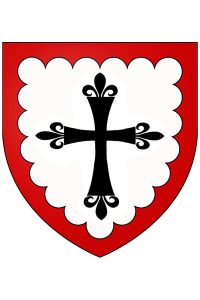
Sir John Swynnerton of Hilton (c.1349 – 1427)
The first Swynnerton Member of Parliament.
John was born about 1349, the son and heir of Sir John Swynnerton (d.1379) of Hilton by his wife Christine. He married, sometime before 1399, Clemency (d. Oct. 1430) and had five sons, one of whom predeceased him.
At various times he held the offices of Hereditary Steward of the forest of Cannock, Staffordshire; Commissioner of Oyer and Terminer for Staffordshire, February 1381 & July 1401; he served on inquiries in November 1390 and July 1406; he took sureties in Staffordshire and Warwickshire March 1392. He was Sheriff of Staffordshire October 21st 1391 to October 18th 1392, and Escheator for Staffordshire November 8th 1401 to November 29th 1402.
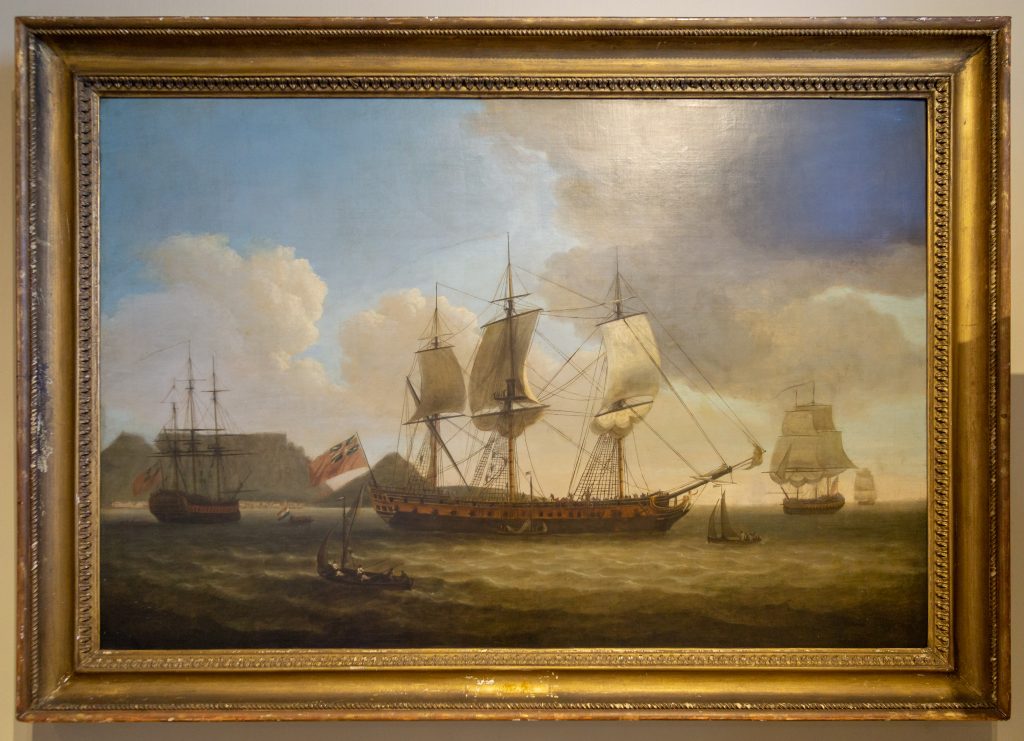
Thomas Swinnerton (18th century, dates unknown)
Thomas Swinnerton was a Marine, and went on the First Fleet voyage to Australia in 1788 as a guard on a convict ship.
Thomas Swinnerton (18th century, dates unknown)
The family has yet to discover Thomas’s dates of birth or death. A while back, Col. Iain Swinnerton wrote:
Recently I found a reference to him in ADM1/3824 where he is listed as being in Captain-Lieutenant Tench’s No.2 Company. He is on the effectives list from 1 July to 30 Sep 1788. He is also listed in ADM1/2309 (a list of Non-Commissioned & Private Marines of the Portsmouth Division discharged in NSW as Settlers in the Colony) as a Private in No.2 Company and having been discharged on 10 December 1791.
There are several references to him in the Mss Catalogue at the Mitchell Library, Sydney, in which it says that, after discharge, he settled at the Field of Mars on the North Shore near the entrance to to the creek leading to Paramatta on Feb 3 1792 (Return of land in cultivation Oct 16, 1792) [Bonwick Transcripts Box 88, page 3]. The 1793 Deed of Swinerton’s farm, 80 acres in the Field of Mars, dated Jan 3, 1792 enclosed in Jan 3 letter (T.Hassall to Capt. Clark, July 8, 1822) [Hassall correspondence Vol.4 page 212].
In the Land Grants 1788-1809, a record of registered grants and leases in NSW, Van Dieman’s Land and Norfolk Island edited by R.J.Ryan 1974, we again find No.53 Thomas Swinerton Jan 3 1792 Granted 80 acres at The Field of Mars on the north shore at the entrance of the creek leading to Paramatta. Rent: 1 shilling a year commencing after 5 years. “Consolidated in Mr Marsden’s grant 1803”. He is also listed on page 417 of Historical Records of New South Wales 1793-1795 as a Marine in Captain Tench’s Company.
I have been unable to locate his attestation form through the card index to ADM 157 at TNA, Kew or an entry in the Description Books in ADM 158 because I do not know which Division Captain Tench belonged to.
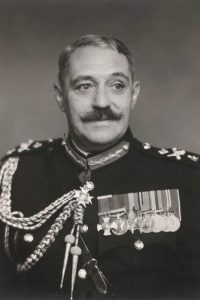
Major General Charles Roger Alan Swynnerton, CBE, DSO (1901-1973)
Distinguished military leader, and father to Col. Jeremy Swynnerton OBE and Timothy Swynnerton (for both, see below), who were both highly active in the Society from its inception.
His portrait photograph is in the National Portrait Gallery.
Major General Charles Roger Alan Swynnerton, CBE, DSO (1901-1973)
Charles Swynnerton was born in Simla, North India on the 12th February 1901, the second son of Frederick Swynnerton, Artist and Louise Angelo.
He was commissioned into the North Staffordshire Regiment (The Prince of Wales’s) in 1920. He joined the 1st Battalion on the Curragh and accompanied it to Gibraltar, Eastern Thrace and Turkey, and Secunderabad in India. Then followed two years in Sierra Leone, where for a time (in 1926) he was also appointed an Inspector of Police by the Governor.
In 1926 he married Clares Ines Stevenson, and they had two sons, Jeremy Charles Angelo and Timothy Frederick.
From 1926 until the outbreak of the Second World War in 1939 he served with his regiment in Lichfield, Ballykinler and Gibraltar. He attended Staff College in 1933 followed by tours on the Staff in Malta, Palestine and Transjordan, York and the War Office where he was serving at the outbreak of war. After a brief spell with his Regiment in Aldershot, in 1940 he was sent on promotion to a Staff post in Nigeria where two divisions were being raised and trained for service in Burma. In 1942 he commanded a battalion of the Leicestershire Regiment for a short time followed by command of the 6th Battalion the North Staffordshire Regiment in 1942/3.
His main service, however, was to be once again with the West African Frontier Force. In September 1943 he assumed command of the 1st (West African) Infantry Brigade which he organised and trained in Nigeria. He took the Brigade to Burma in 1944 as part of the 82nd West African Division and led it throughout the Arakan campaign until the end of the war. There were few roads, and most supplies, stores and and equipment had to be transported by porters (called Auxiliary Groups) over the entire 500 miles of the Arakan mountains. At the end of the war, during which he was awarded the Distinguished Service Order, he was appointed to command of the Division and took it back to Nigeria to be disbanded.
It is interesting to note that at this time his official rank was Major (War Substantive Lt.Col.) (Temporary Brigadier) (Acting Major General). In 1946 he was appointed General Officer Commanding Nigeria District and a member of the Executive Council of Nigeria on the 17th January 1947. He was Acting GOC-in-C at the time of the first serious post-war disturbances in West Africa (the Gold Coast of 1948) when reinforcement troops were flown in from neighbouring Nigeria in a hotch-potch of civil and military aircraft.
Charles Swynnerton was very much loved by his African soldiers and gained the respect, confidence and friendship of many of the local leaders who later came to prominence in Nigeria.
For his services in Nigeria he was appointed a Companion of the Order of the Bath on the 2nd January 1950. After leaving Nigeria he was appointed British Military Attache on the 25th September 1949 to what the Foreign Office still rather quaintly called Angora, in Turkey, where his fluency in the Turkish language was a great asset and much admired by the Turks. Just prior to this tour, he was appointed ADC to HM King George VI from 22nd June 1949 until the latter’s death in 1952, and subsequently ADC to HM Queen Elizabeth II. After holding the post in Turkey for what must surely be a record period of almost five years, he retired on the 21st July 1954 to a house in Hampshire. He was appointed Colonel Commandant of the Royal West African Force on 23th September 1954 and Colonel of the North Staffordshire Regiment (The Prince of Wales’s) on 1st June 1955, an achievement without parallel in the history of his regiment.
While on an official visit to troops in Sierra Leone in March 1953 in his capacity as Colonel Commandant of the RWAFF, he became dangerously ill in Freetown and had to be brought home by sea. Although he recovered fully he was forced to resign both these appointments and he and his wife eventually decided to leave England and settled in Spain where they built themselves a house near Malaga. After almost fifteen years of retirement in Spain both he and his wife became ill and died in London in 1973 within a few months of each other.
Major General Charles Swynnerton was a keen and talented writer of short stories. In 1938 he won second prize in the Royal United Service Institution’s Trench Gascoigne Memorial Essay Competition. He had a large number of articles published regularly under a variety of pseudonyms in such papers and magazines as The Times, Blackwood’s Magazine, The Illustrated London News and, of course, his Regimental Magazines.
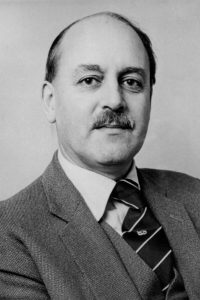
Colonel JCA Swynnerton, OBE (1927-2011)
Jeremy Charles Angelo Swynnerton was born at Camberley, on May 4th 1927, where his father, Major General Charles Swynnerton (see above) was then stationed. He inherited his unusual name of Angelo from an ancestor, the famous Italian fencing master Dominico Angelo Malevolvolti Tremamondo (1716-1802), who taught all the Royal Dukes fencing at his famous academy in London.
Colonel JCA Swynnerton
Educated at Wellington College, he joined the army in February 1945, and was commissioned the following year into the North Staffords, joining the 1st Battalion, who were then serving in India.
Jeremy was eventually appointed Colonel of The Staffordshire Regiment, which was formed by a merger of his old regiment, the North Staffords, and the South Staffords, in 1959.
Jeremy was at various times both Chairman and Vice-President of the Swinnerton Family History Society, and was a keen and regular contributor from the very beginning.
For a full record of his army career, see The Swinnerton Saga No. 12 Vol. 14 (December 2011)
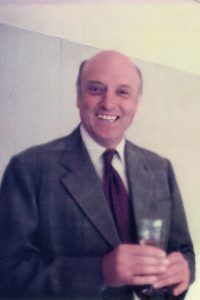
Timothy Swynnerton (1932-2016)
Timothy Swynnerton was born on 21st November 1932 at Downpatrick, Co. Down, Northern Ireland, the second son of General Charles Roger Alan Swynnerton and Clare Inèz (nee Stevenson), his older brother being the late Colonel Jeremy Charles Angelo Swynnerton (see above), a former chairman and subsequently a Vice President of our society.
Colonel JCA Swynnerton
Tim was educated at Beaudesert Park Preparatory School and Wellington College. We are indebted to John Swynnerton for filling in the gaps in Tim’s career, which Tim set out in a letter to John’s father, Sir Roger Swynnerton, formerly President and later Patron of our society:
From 1952 to 1954 I was a 2nd Lieutenant in the Durham Light Infantry attached to the 5th Battalion of the Nigeria Regiment, and served briefly in Zaria, then Kaduna, and lastly Ibadan. At the end of my National Service I was granted a Short Service commission, serving with the Durhams until 1958, and becoming a Company Commander.
In 1958 I joined Unilever, and served all my time with either the United Africa Group or the Plantations Group. In 1961 I joined Pamol in Calabar as Personnel Manager. During 1961 and 1962, I was the Chief Negotiator for the Plantation Association of Nigeria.
In 1963 I moved to Baringa in the Southern Cameroons as Administration Manager of Pamol (Cameroon) Limited. This was after the plebiscite and Southern Cameroons became Western Cameroon. I was chairman of the West Cameroon Employers Association for 1963, 1964 and 1965, and a member of the West Cameroon Labour Advisory Committee in 1963 and 1964. From 1966 to 1969, I was Personnel Manager with Pamol (Malaya) Sdn. Bhd at Kluang, Johor.
From November 1971 until December 1974 I was Personnel Manager with African Timber & Plywood (Ghana) Limited at Samreboi near Enchi in the Western Province of Ghana. During this time I was the Chief Negotiator for the Ghana Timber Association, and in 1974 I was ‘Enstooled’ as Nana Boafo 1, Chief of Aboi – though approved by the area chiefs, this would not have been approved by the Acheampong Government.
From 1975 to 1978 I worked in the Middle East. In 1979 and 1980 I was Personnel Adviser to Levers Solomons Limited – the coconut, cocoa and cattle operation in the Solomon Islands. From 1980 to 1982 I was with African Timber & Plywood at Sapele in Delta State, Nigeria – a job that was a complete and utter waste of time, and I would have been far wiser to have turned it down!
In 2016, Col. Iain Swinnerton wrote:
In 1983/84 Tim bought Whinburgh Old Hall, which was a complete wreck, and got a job at the National Bank of Abu Dhabi (1984 -1987) to pay for its restoration. It was a lovely old Long House, with the remains of a moat, and large outbuildings in which he housed his beloved collection of vintage cars. Some of you may remember staying there when Tim hosted a Council meeting when he was a member of Council.
Tim was a man of many parts, excellent company always, and he will be sorely missed. Like his brother Jeremy, he never married, and so that line of the family has come to an end.
